Dental Services
Dental COHATs and Oral Health Care
Did you know dental disease can lead to a broken jaw? Dental disease is one of the most common sources of chronic pain and infection in dogs and cats, and one of the most commonly underestimated chronic health problems for our beloved pets.
At Bristol Veterinary Clinic, we refer to anesthetized dental care as a Dental COHAT, which stands for Comprehensive Oral Health Assessment and Treatment. We use this term because proper veterinary dental care is so much more than just a “cleaning” or a “dental prophylaxis.” The goal is not simply cleaner-looking teeth; the goal is to evaluate the entire mouth, identify painful or hidden disease, detect masses or dangerous lesions early, and protect your pet’s comfort, function, and long-term health.
What a Dental COHAT Includes
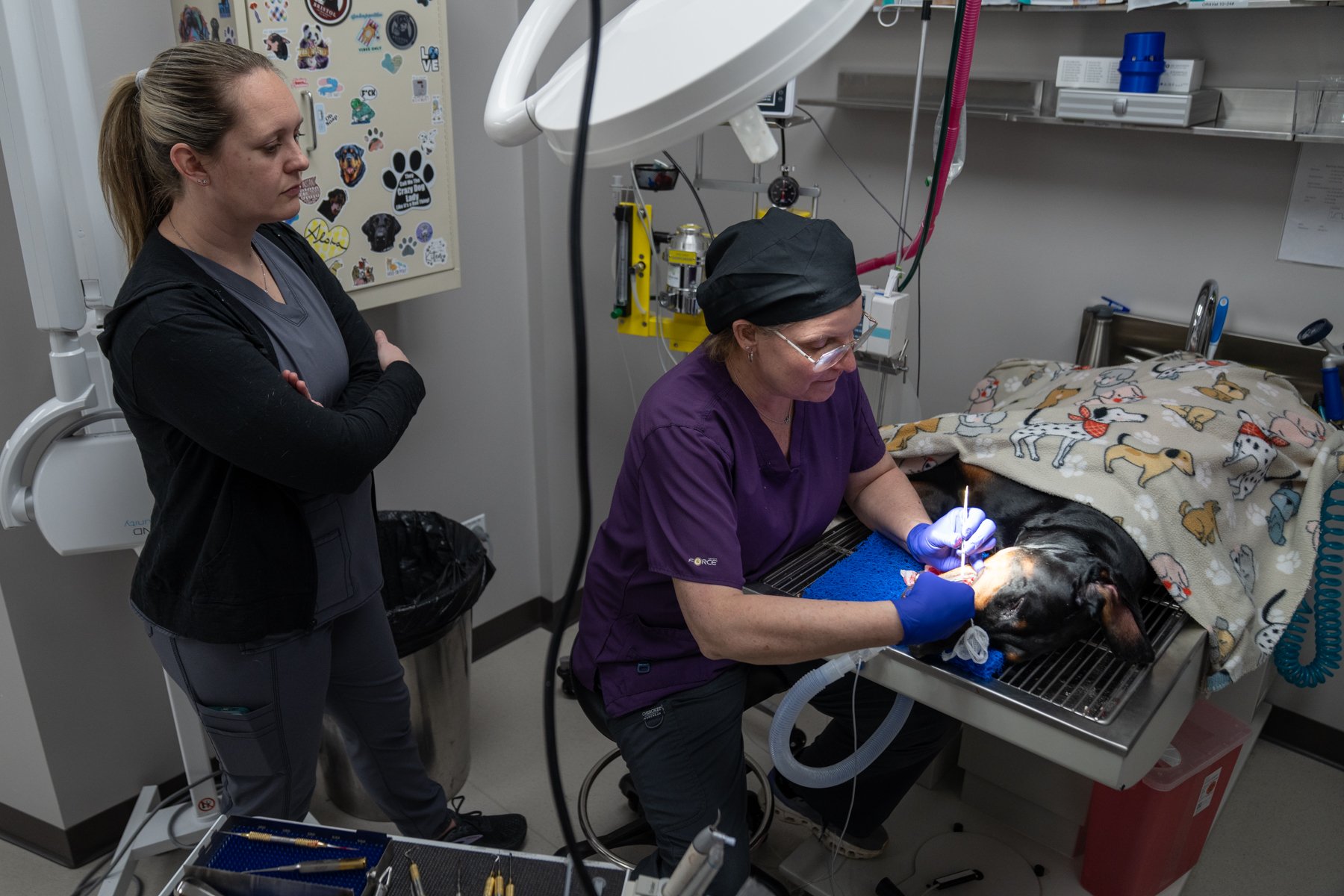
During a Dental COHAT, your pet is placed under anesthesia so we can safely and thoroughly evaluate the teeth, gums, tooth roots, bone, and oral tissues.
A Dental COHAT may include:
- Complete oral examination under anesthesia
- Tooth-by-tooth assessment, probing, and dental charting
- Ultrasonic scaling above and below the gumline
- Thorough tooth polishing
- Full digital dental radiographs as part of a proper oral health assessment
- Evaluation for fractured, loose, diseased, missing, retained, unerupted, crowded, or abnormally positioned teeth
- Assessment of tooth and jaw alignment concerns
- Evaluation of oral masses, ulcerations, wounds, or abnormal tissue changes
- Pain management, including local nerve blocks when indicated
- Extractions ranging from straightforward to more involved surgical extractions
- Referral to a veterinary dental specialist when tooth-saving, bite-saving, or more advanced procedures may be appropriate
Why Dental Radiographs Matter
Digital dental radiographs are performed routinely as part of a proper oral health assessment because much of the tooth exists below the gumline.
A tooth may look healthy on the surface while the roots, surrounding bone, or structures below the gumline show significant disease. Radiographs help us evaluate tooth roots, bone loss, retained roots, unerupted teeth, fractured teeth, tooth resorption, dentigerous cyst risk, and other hidden pathology.
Radiographs also help establish a baseline for your pet’s oral health, allowing us to recognize changes earlier, before disease becomes severe or obvious at home.
More Than Tartar
Not every dental problem starts with tartar. BVC evaluates missing teeth, unerupted teeth, retained deciduous teeth, incomplete eruption of adult teeth, supernumerary teeth, crowded teeth, and tooth or jaw alignment concerns.
These issues matter for all dogs and cats. An unerupted tooth can lead to a dentigerous cyst and significant oral pathology later in life. Abnormal tooth or jaw alignment may cause palatal trauma, tooth-on-tooth wear, discomfort, or chronic pain as a pet ages.
Cats also deserve special attention. Painful feline dental conditions, including tooth resorption, periodontal disease, gingivostomatitis, fractured teeth, and retained or unerupted teeth, may be difficult or impossible to identify during an awake exam.
Extractions and Pain Control
When a tooth is diseased, extraction may be recommended to relieve pain, control infection, protect surrounding tissues, and preserve comfortable oral function.
With advanced periodontal disease, diseased teeth can weaken the surrounding bone. In some patients, especially small dogs and cats, severe dental disease may increase the risk of serious complications, including jaw fracture. Removing severely compromised teeth can reduce ongoing infection and help protect the health and stability of the mouth.
When extractions are needed, appropriate pain management, including local anesthetic nerve blocks when indicated, is an important part of care.
Anesthesia and Patient Monitoring
Each Dental COHAT includes an individualized anesthetic plan based on the patient’s age, health history, physical exam findings, procedure needs, and appropriate pre-anesthetic screening.
Patients are monitored throughout anesthesia and recovery. Supportive care includes IV catheterization, anesthetic monitoring, patient warming, pain management, and adjustments based on the individual patient’s needs.
For selected patients, including some higher-risk patients, Bristol Veterinary Clinic may recommend or require sevoflurane anesthesia as a safer, better alternative to isoflurane.
Why Anesthesia Is Necessary
A proper Dental COHAT cannot be performed on an awake patient.
Anesthesia allows us to examine the entire mouth, clean below the gumline, probe each tooth, take dental radiographs, thoroughly assess painful areas, provide local pain control, and treat disease safely.
Anesthesia-free cleanings may remove visible tartar, but they do not allow a complete oral health assessment. They cannot safely clean below the gumline, obtain dental radiographs, evaluate tooth roots, diagnose bone loss, treat painful teeth, or identify many forms of hidden disease. They may make the teeth look cleaner while serious pathology remains untreated.
Anesthesia-free cleanings can also be harmful when calculus is scraped from the teeth without proper polishing. Scaling leaves microscopic rough areas on the tooth surface. During a Dental COHAT, polishing smooths the enamel after scaling, much like a fine finishing step. Without that polishing, the roughened surface can make it easier for plaque and tartar to accumulate and cause disease.
Home Dental Care
Home dental care is a vital part of your pet’s daily maintenance, but it is a complement to, not a replacement for, a Dental COHAT.
Brushing, dental diets, water additives, VOHC-approved chews, and other home-care tools may help reduce calculus or plaque accumulation and slow the progression of dental disease when used consistently and appropriately. The most effective home dental care is usually daily tooth brushing.
Home care cannot remove established tartar. Once plaque hardens, it becomes firmly attached to the tooth surface and requires professional dental instruments to remove it safely and effectively.
Think of tartar like concrete on the teeth. Once it is there, we need specialized tools to remove it. After it is removed, consistent home care can help slow new tartar buildup, much like regular sweeping can keep a road clean, but it cannot sweep away hardened concrete.
Occasional brushing, including brushing performed during grooming appointments, is unlikely to meaningfully control plaque because plaque begins accumulating again quickly. Intermittent brushing is not harmful when done gently, but it should be viewed more like a temporary freshen-up than true dental disease prevention. Just like for people, daily home care for your pet, started after a proper Dental COHAT, is much more effective at maintaining oral health between professional procedures.
Signs Your Pet May Need a Dental Evaluation
Pets should be evaluated if you notice bad breath, visible tartar, red or swollen gums, drooling, pawing at the mouth, chewing differently, dropping food, loose or broken teeth, retained baby teeth, missing adult teeth, abnormal tooth position, facial swelling, changes to facial symmetry or appearance, oral masses, reluctance to chew hard food or treats, tearing from the eyes, squinting of an eye, or any other changes to your pet’s eyes.
However, many pets with dental disease show no obvious signs at home. Dogs and cats often continue eating even when their mouths are painful. Routine oral exams and Dental COHATs allow us to find and address disease earlier.
Our Approach
At Bristol Veterinary Clinic, dental care is not treated as a quick cosmetic procedure. We take a medically guided approach focused on comfort, function, infection control, early detection, and long-term oral health.
Our goal is to help owners understand what is happening in their pet’s mouth, why it matters, and what options are available. When a case would benefit from advanced dental care such as root canal therapy, oral CT, complex jaw alignment treatment, or other specialty procedures, we will discuss referral to a veterinary dental specialist.